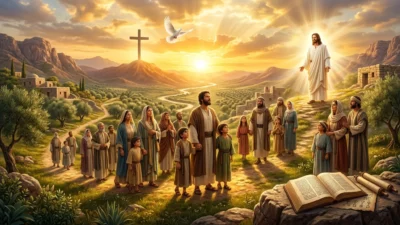
Have you ever wondered what Passover means in the Bible and why it is so important to both the Old and New Testaments? Passover is one of the most important events in biblical history. It remembers how God delivered the Israelites from slavery in Egypt and protected them from the final plague.
The biblical meaning of Passover is centered on deliverance, protection, sacrifice, redemption, freedom and God’s faithfulness. In the New Testament, Passover takes on an even deeper meaning because Jesus’ death and resurrection are closely connected with the Passover story.
What Does Passover Mean in the Bible?
The word Passover comes from God’s instruction in Exodus when He told the Israelites that the destroying plague would “pass over” the homes marked with the blood of the lamb.
God said:
“When I see the blood, I will pass over you.” — Exodus 12:13
This event happened on the night before Israel’s deliverance from Egypt.
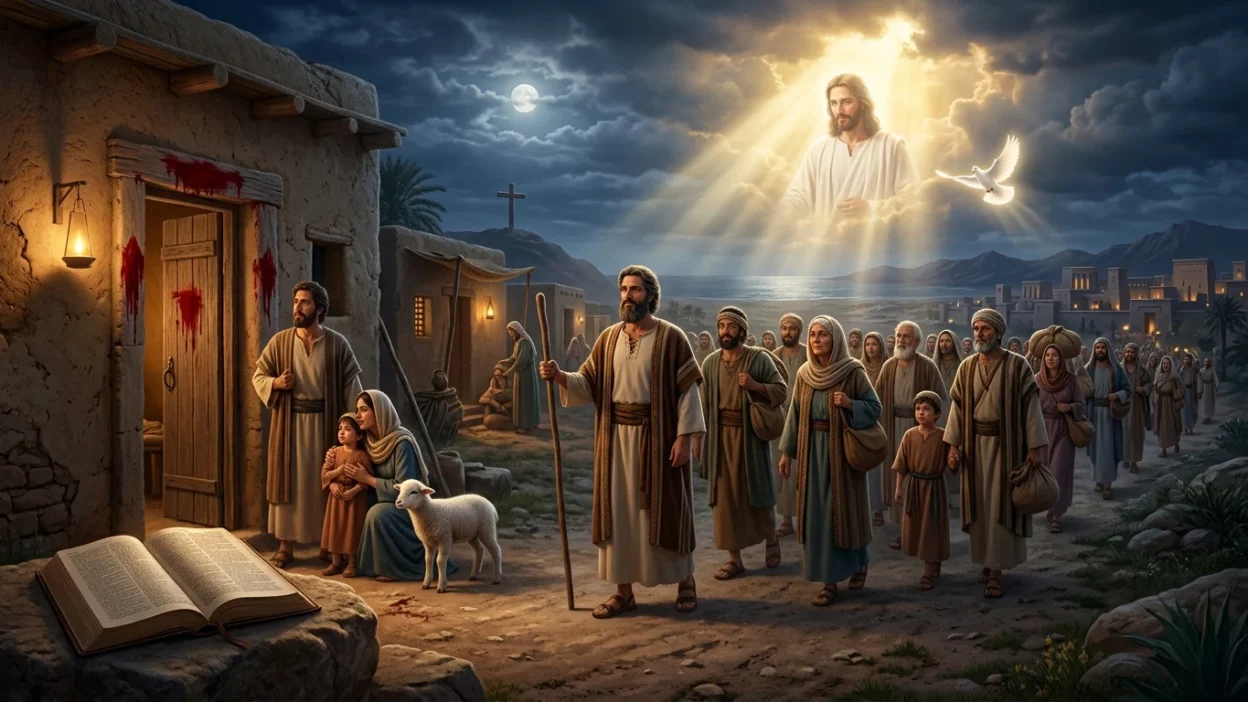
The Israelites were instructed to sacrifice a lamb and put its blood on the doorposts of their homes. When the final plague came upon Egypt, the homes marked by the blood were spared.
Passover therefore became a memorial of God’s deliverance and protection.
The Story of Passover
The story begins when the Israelites were enslaved in Egypt.
God heard their cries and sent Moses to lead them out of slavery.
Pharaoh repeatedly refused to let the Israelites go. God then sent a series of plagues upon Egypt.
The final plague was the death of the firstborn.
But God provided a way for the Israelites to be protected.
Each Israelite household was instructed to take a lamb and follow God’s instructions concerning its sacrifice and the blood.
“Take care of them until the fourteenth day of the month, when all the members of the community of Israel must slaughter them at twilight.” — Exodus 12:6
The blood became a sign of protection.
The Passover Lamb
The lamb is one of the most important symbols of Passover.
Each household was instructed to take a lamb without defect.
The lamb was sacrificed, and its blood was placed on the doorposts.
This points to a powerful biblical theme:
Deliverance came through the blood of a sacrifice.
The Passover lamb later becomes especially important in understanding Jesus Christ.
John the Baptist called Jesus:
“Look, the Lamb of God, who takes away the sin of the world!” — John 1:29
Christians understand Jesus as the ultimate fulfillment of the sacrificial imagery found throughout Scripture.
Passover and Jesus Christ
The connection between Passover and Jesus is one of the most important themes in the New Testament.
Paul wrote:
“For Christ, our Passover lamb, has been sacrificed.” — 1 Corinthians 5:7
This verse directly connects Jesus with the Passover lamb.
The Passover lamb’s blood protected the Israelites from judgment.
Jesus’ sacrifice provides salvation from sin for those who trust in Him.
The Passover story therefore points Christians toward the greater work of Christ.
Passover Represents Deliverance
One of the central meanings of Passover is deliverance.
Israel was delivered from physical slavery in Egypt.
Through Jesus, Christians understand salvation as deliverance from the power and penalty of sin.
The Exodus became a picture of God’s ability to rescue His people.
It reminds us that God sees suffering, hears prayers, and can bring His people into freedom.
Passover Represents Redemption
Passover also represents redemption.
The Israelites could not free themselves from Egypt through their own power.
God intervened and brought them out.
Likewise, Christianity teaches that salvation is ultimately God’s work through Jesus Christ.
Peter wrote:
“You were redeemed… with the precious blood of Christ, a lamb without blemish or defect.” — 1 Peter 1:18–19
The language of redemption connects beautifully with the imagery of the Passover lamb.
Passover and the Exodus
Passover cannot be separated from the Exodus.
After the final plague, Pharaoh finally allowed Israel to leave.
The Israelites began their journey toward freedom.
God later divided the Red Sea and brought His people safely through.
Passover therefore became a yearly reminder:
God rescued us from slavery.
God commanded Israel to remember this event from generation to generation.
“This is a day you are to commemorate; for the generations to come you shall celebrate it as a festival to the Lord.” — Exodus 12:14
Passover and Unleavened Bread
Passover is closely connected with the Feast of Unleavened Bread.
The Israelites were commanded to eat unleavened bread because they left Egypt quickly.
There was no time for their dough to rise.
This became a lasting part of the Passover observance.
In the Bible, leaven can also be used symbolically in different ways, but Christians should be careful not to assume that every mention of leaven always has the same meaning.
Passover and the Last Supper
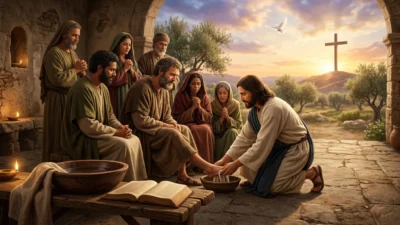
The final meal Jesus shared with His disciples is closely connected with Passover.
The Gospels describe Jesus gathering with His disciples around the time of Passover.
During this meal, Jesus took bread and wine and connected them with His coming sacrifice.
Luke records:
“This is my body given for you; do this in remembrance of me.” — Luke 22:19
Jesus was preparing His disciples to understand the meaning of His death.
The Passover story was moving toward its greater fulfillment in Christ.
Passover and Freedom From Sin
The Israelites were physically freed from Egypt.
The Gospel offers spiritual freedom through Christ.
Jesus said:
“If the Son sets you free, you will be free indeed.” — John 8:36
This is an important spiritual lesson from Passover.
God does not simply want His people to survive slavery.
He wants them to walk in freedom.
For Christians, this means freedom from slavery to sin and a new life of obedience to God.
Spiritual Significance of Passover
The spiritual significance of Passover includes:
- Deliverance
- Protection
- Redemption
- Sacrifice
- Freedom
- Faith
- Obedience
- God’s faithfulness
- Salvation
- New beginnings
Passover reminds believers that God is able to rescue His people.
It also points toward the greater salvation Christians find in Jesus Christ.
Passover and the Blood of the Lamb
Blood is central to the Passover story.
God told Israel:
“The blood will be a sign for you on the houses where you are, and when I see the blood, I will pass over you.” — Exodus 12:13
The blood was a sign of protection.
The New Testament develops this theme through Christ.
John’s vision in Revelation repeatedly uses the imagery of the Lamb, showing how deeply the sacrificial theme runs through the Christian understanding of salvation.
For Christians, Jesus is the Lamb who gave Himself for the salvation of humanity.
What Can Passover Teach Christians Today?
Passover provides several powerful lessons.
Remember God’s Faithfulness
Israel was commanded to remember how God delivered them.
We should also remember God’s faithfulness in our own lives.
Trust God
The Israelites had to trust God’s instructions even before they saw the outcome.
Faith often requires trusting God before we understand everything.
Leave the Old Life Behind
The Exodus was a journey away from slavery.
Christians are called to leave sinful patterns behind and walk in a new life.
Value Christ’s Sacrifice
Passover helps Christians understand the biblical background of Jesus as the Lamb of God.
Live in Freedom
God did not rescue Israel so they could return to slavery.
Likewise, believers are called to live in the freedom Christ provides.
Passover in Dreams or Real Life
If you dream about Passover, a lamb, blood on a door, Egypt, Exodus, or crossing water, the Bible does not provide one universal interpretation for such dreams.
However, these biblical themes may encourage reflection on deliverance, protection, freedom, repentance, redemption, and God’s faithfulness.
Rather than assuming that a dream is automatically prophetic, compare its themes with Scripture and keep your focus on God.
Conclusion
The Passover meaning in Bible is centered on God’s deliverance of Israel from slavery, protection through the blood of the lamb, redemption, freedom and His faithfulness.
For Christians, Passover also points toward Jesus Christ.
Paul clearly wrote:
“For Christ, our Passover lamb, has been sacrificed.” — 1 Corinthians 5:7
The story begins with a lamb in Egypt, but it ultimately points toward the greater story of salvation.
Passover reminds us that God is a Deliverer.
He hears His people’s cries. He provides a way of redemption. And through Christ, believers can experience forgiveness, freedom, and new life.
Passover is ultimately a story of rescue and a powerful reminder that God’s saving grace is greater than our bondage.